

Thank you for Subscribing to Utilities Business Review Weekly Brief

Stantec
Chris Hudson
Cleaner energy from waste

Chris Hudson
In the UK, nearly 15 million tonnes of residual waste are turned into around 8.6 Terawatts-per-hour (TWh) of electricity every year. This amount of energy registers at just under 3% of our total generation capacity. The process also releases nearly 10 million tonnes of carbon dioxide into the atmosphere.
If we are serious about reaching net zero, we need to cut these carbon emissions in the waste sector. Decarbonisation should certainly focus on reducing the amount of residual waste as well as the amount of fossil carbon through removing plastics for recycling. But the Environmental Services Association (ESA) and individual waste management companies have identified the installation of carbon capture on Energy from Waste (EfW) facilities as an essential component in the fight. The barriers to the uptake of carbon capture, utilisation, and storage (CCUS) can be split intothree main challenges:Technology, cost, and markets. To date, we don’t have any carbon capture plants developed on EfWs in the UK—and only limited examples overseas—because of these barriers. Adapting the technology The technology needed for capturing carbon is well established in the oil and gas sector, but we need to adapt it for installation on EfWs. This can be achieved with a good understanding of the nature of the flue gases and the engineering installation requirements. And while the market for equipment is still emerging, there are other options available. These range from modular predesigned systems to fully bespoke stick-built construction methods. Installing CCUS processing on individual facilities is more of a technically challenging hurdle to ensure that tapping off and reinjecting gases doesn’t affectthe EfW process. This process amendment requires careful planning and added facility downtime to complete. Adding a CCUS stage also means we need extra space on site or in surrounding areas, both for physical installation and for any transport links for site servicing and removing the captured carbon. Incentivising the development of CCUS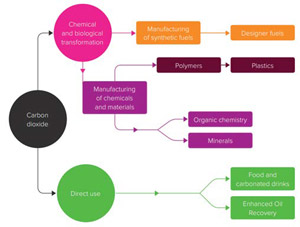 CCUS processing is expensive, and the operation needs a large amount of energy. This reduces the amount of electricity we can export and impacts the overall cost of a facility. As a result, CCUS developments have stalled. The Department for Business, Energy & Industrial Strategy (BEIS) has received nine applications for funding, which shows that removing the cost barrier could be the catalyst for CCUS development in the UK.
The recently released consultation on the UK Emissions Trading Scheme (UK ETS) considers bringing EfWs within its remit to reduce or reverse the cost difference. This is so the market can be levelled, and carbon capture is incentivised. This is a notable legislative change and should ensure that facilities with CCUS can compete with non-equipped EfWs.
However, it is not without its issues. The majority of the EfW fleet serves local authorities under long-term contracts, whose terms will dictate the ability to manage increased costs. Negotiations might be needed to understand how any amendments can pinpoint and distribute risks accordingly. Without accompanying landfill tax increases, this could perversely incentivise driving residual waste down the waste hierarchy—reducing the environmental benefit.
CCUS processing is expensive, and the operation needs a large amount of energy. This reduces the amount of electricity we can export and impacts the overall cost of a facility. As a result, CCUS developments have stalled. The Department for Business, Energy & Industrial Strategy (BEIS) has received nine applications for funding, which shows that removing the cost barrier could be the catalyst for CCUS development in the UK.
The recently released consultation on the UK Emissions Trading Scheme (UK ETS) considers bringing EfWs within its remit to reduce or reverse the cost difference. This is so the market can be levelled, and carbon capture is incentivised. This is a notable legislative change and should ensure that facilities with CCUS can compete with non-equipped EfWs.
However, it is not without its issues. The majority of the EfW fleet serves local authorities under long-term contracts, whose terms will dictate the ability to manage increased costs. Negotiations might be needed to understand how any amendments can pinpoint and distribute risks accordingly. Without accompanying landfill tax increases, this could perversely incentivise driving residual waste down the waste hierarchy—reducing the environmental benefit.
Installing CCUS—or having to manage emissions through the ETS— will add to the cost of residual waste management. As difficult as this may be, we need to change how we manage our waste to reach net zero
The articles from these contributors are based on their personal expertise and viewpoints, and do not necessarily reflect the opinions of their employers or affiliated organizations.
