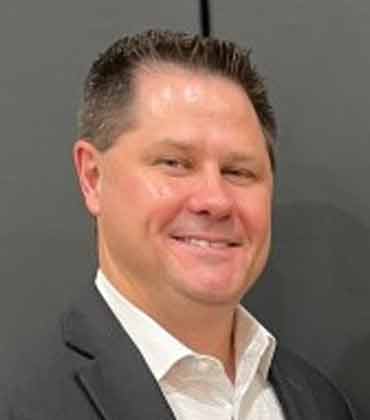
Geoff Pope
Environmental Sustainability StewardBeing an environmental professional for 20-plus years, Geoff Pope’s career has included everything from Phase I and II ESAs, remedial design/construction, multi-site CWA/SPCC/RCRA compliance, and EMS creation and implementation. Throughout his career journey, he has served as a senior environmental engineer, project manager, and environmental program manager across corporate levels and multi-site organizations. Currently, Pope serves as an environmental program manager at Rentokil Terminix.
Please share with our readers your current roles and responsibilities.
I am the an environmental programs manager at Rentokil Terminix, a distributed services company serving across U.S., Canada, and Mexico. My primary responsibility is to develop, implement, and oversee environmental compliance programs across Rentokil Terminix. So anything related to environmental matters falls under my responsibility. This includes oversight of environmental due diligence for mergers and acquisitions; creating and implementing environmental compliance programs and management systems; and managing the remediation of existing properties with legacy environmental issues.
Being in the industry for 22 years, what according to you are some of the factors that contribute to crafting a successful sustainability program?
There are four main areas that I believe are crucial when establishing a sustainability program. The first is understanding the priorities of your company's stakeholders. It is essential to engage in a formal stakeholder engagement process to gather diverse perspectives, foster support and shape sustainability programs. This is done through periodic meetings with representatives from all departments as our business activities impact not only our employees but also our customers and the environment. To maximize the effectiveness of our sustainability program we consider both internal and external opinions. Our sustainability program focuses not just on reducing greenhouse gas emissions but also on finding more environmentally friendly alternatives to the chemicals we use and reducing our carbon footprint internally. This includes exploring product substitution, paper plastics, or focusing on reusable consumables and checking if waste materials are rightly sent for recycling, incineration, landfilling. We also seek ways to reduce energy consumption at our branches like utilizing LED light bulbs instead of fluorescent ones. Considering all these, it is important to include both internal and external stakeholders; as each stakeholder will have different perspectives on what is important and what drives our sustainability program.
My advice is having great ideas and goals for your environmental programs is necessary but one should also maintain reasonable expectations regarding the pace of progress.
Secondly, organizations must create a sustainability mission statement or vision to serve as the organization’s voice of sustainability. The mission statement/vision can outline the company’s big-picture goals, and objectives and should encompass foundational topics related to growth and future objectives; which evolve over time. Once the sustainability mission statement is established, the next step is setting targets, and goals, and identifying key performance indicators (KPIs).
The KPIs can center around operational areas relevant to the business, such as energy, water, or waste. It is crucial to identify both short- and long-term (e.g., 10 years and greater) goals and observe the progress using the KPIs. It is also essential to have a roadmap in place, ensuring a clear path to attaining long-term goals.
And lastly, it is important for an organization to determine how it is going to measure performance against the established KPIs; what the initial baseline starting point will be; and how the data will be normalized (for example, will it be compared relative to employee headcount, per square foot of office space, or annual units of production or revenue generated).
What does the future initiative in terms of renewable energy at your organization look like?
Being a distributed service company with numerous branches across U.S., Canada, and Mexico, one sustainability initiative we are currently focusing on is determining the sources of our electrical service and setting targets for energy reduction at each branch by 2030. To achieve this goal, we need to examine where our electricity is sourced and how it is generated. By looking upstream at our electricity providers, we can assess the environmental impact of their power generation methods. Our goal is to move away from sources like coal-fired power plants and instead prioritize renewable energy options such as wind, solar, and natural gas. This allows us to reduce our carbon footprint and align with our sustainability objectives. To support this transition, we are exploring various opportunities. Some of our electricity providers offer green pricing alternatives, which allow us to purchase power from identified renewable sources for a nominal surcharge. In states like Texas where electrical providers are deregulated, we have a lot more alternatives to choose power suppliers. This enables us to make conscious decisions about sourcing our electricity from wind farms or solar farms, further promoting sustainable practices.
Another option under considering is the purchase of green certificates or offsets from local power suppliers. In Tennessee, there is a program that offers renewable energy certificates corresponding to megawatt-hours generated by wind farms in the Midwest. This allows customers to use renewable energy for a fixed rate. So for us as a customer, the flexibility to purchase power from renewable alternatives is the key to achieving some of our sustainable initiatives.
Can you shed some insights on the role of AI in fostering environmental sustainability?
Within the realm of environmental sustainability, the integration of AI and IoT technology offers significant advantages, particularly in automating processes currently performed by employees. For instance, in the case of environmental spill detection, by employing AI or cameras we can monitor spaces and identify spill indicators such as changes in shape, color, or temperature enabling a real-time alert. This helps in reducing response time and minimizing health, safety, and environmental risks. Another promising application of AI and IoT is in waste management at facilities. I recently attended a conference where Amazon shared their use of AI to monitor closed-circuit televisions of their trash dumpsters and collection areas. Using AI, Amazon is able to identify illicit disposal activities at their dumpsters, whether by employees or unauthorized personnel; which in turn, is reducing the amount of waste sent off-site for disposal, leading to cost savings and improved waste management practices. In addition, AI provides real-time monitoring of weather patterns and correlates them with electrical grid demand to identify trends in supply and demand, allowing it to stay ahead during peak demand periods.
Can you share with our readers any project initiatives you have been part of on in the environmental management space?
Prior to joining Rentokil Terminix, I worked as an environmental consultant for over 20 years for a diverse range of companies; from small, disadvantaged businesses to large, international firms. Regardless of the size of the company, I have had the privilege to work alongside and be mentored by experienced environmental professionals at every stop along my professional journey. The guidance and insights I received have greatly contributed to my growth as a project manager; and have given me opportunities to lead diverse project teams and develop both my technical and leadership skills.
A couple of projects I was involved in were the development and implementation of environmental management systems and training programs for Department of Defense facilities throughout the Southeast United States; creating and implementing multimedia, environmental compliance programs for industrial clients nationwide; and designing, installing, and operating environmental remediation systems for state-funded cleanup initiatives. The diversity of projects I worked on, spanning different regions across the country and even globally provided me with broad exposure to a variety of projects.
What would be your piece of advice to budding professionals?
My advice is having great ideas and goals for your environmental programs is necessary. But one should also maintain reasonable expectations regarding the pace of progress. Especially when working with a new environmental program or one that hasn't been prominently featured before, it can be challenging to generate initial momentum to drive change. In my experience, working at the corporate level and striving to influence change in the field or at a branch level can be difficult. One way to overcome this challenge is to engage with field leadership and explain the reasons behind proposed changes, and highlight how it can lead to potential gains in efficiency and profitability in the field; and not just at the corporate level. Seeking input and genuinely considering the suggestions of frontline Colleagues, rather than dictating changes from afar, will greatly increase the potential for a successful and supported implementation of a new program or procedure.