

Thank you for Subscribing to Utilities Business Review Weekly Brief


 Brimman Frazer, President
Industries such as oil and gas, construction, manufacturing, and dewatering are under growing pressure to comply with increasingly stringent water discharge standards.
As environmental standards get stricter, the challenge of managing complex wastewater streams has become increasingly urgent. This is especially true for streams contaminated with dissolved heavy metals such as mercury, arsenic, cadmium, and selenium. Traditional chemical and biological treatments often fall short, struggling to meet these stringent removal requirements, which in turn increases operational costs and complexity.
Sorbster addresses these gaps while tackling some of the most pressing environmental and industrial challenges, transforming the landscape of wastewater treatment— particularly in Latin America.
With a breakthrough approach to filtration, the company specializes in removing heavy metals and other complex contaminants from wastewater, providing industries and municipalities with efficient, cost-effective, and environmentally responsible solutions. Known for its proprietary filtration media co-developed with the U.S. Environmental Protection Agency (EPA) through a Cooperative Research and Development Agreement, the company has positioned itself as a leader in treating wastewater at parts per trillion (PPT) concentrations, particularly in environments where traditional chemical and biological methods fall short.
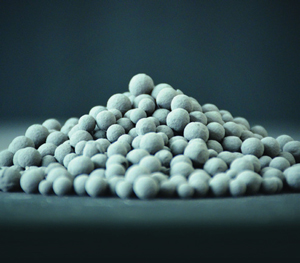 At the core of Sorbster’s innovative solutions lies its proprietary filtration media, designed to target dissolved heavy metals with unparalleled precision. These heavy metals, including mercury, arsenic, cadmium, selenium, and hexavalent chromium, often pose significant challenges for wastewater treatment in industrial and municipal contexts. Sorbster’s media selectively bond to these metals through chemisorption, a process that allows the metals to be permanently bonded to the filtration media via covalent bonds. The technique ensures that once the metals are removed from wastewater, they cannot be released back into the environment.
“The level of precision and permanence sets us apart from conventional methods, which often rely on more reactive processes that can lead to leaching or require further treatment,” says Brimman Frazer, president, Sorbster.
The company’s heavy metal filtration technology is groundbreaking in terms of efficacy and also offers numerous operational advantages. Its filtration media require minimal intervention once deployed. This reduces the operational burden on clients, particularly in remote areas or facilities with limited staff. Additionally, Sorbster’s filtration systems do not support bacterial growth, a common issue in biological treatment methods, ensuring that the media remains effective over time without requiring periodic system resets.
“Our data-driven approach allows us to ensure that the solutions we provide will work efficiently and cost-effectively. We focus on ensuring quality and reliability in every step of the process, from research and development to implementation,” says Frazer.
This emphasis on data and precision is integral to Sorbster’s success. The company conducts a significant amount of research and development for its size, consistently testing its filtration media against a wide variety of wastewater samples to refine its solutions and improve performance. Every treatment system is customized to the specific needs of the client, ensuring that each deployment is optimized for maximum efficiency and minimum cost.
Commitment to Environmental Responsibility
Beyond economics and productivity, environmental responsibility is the cornerstone of Sorbster’s mission. The company’s focus on permanently removing toxic heavy metals from wastewater aligns with growing global efforts to mitigate pollution and promote sustainability. In particular, Sorbster’s media are designed to meet the most stringent environmental standards, ensuring they can be disposed of safely once their useful life has come to an end.
The spent media passes the Toxicity Characteristic Leachate Procedure (TCLP) test for non-hazardous disposal, a key feature that ensures they are safe to dispose of without posing a risk to the environment. This characteristic is essential for industries and municipalities seeking long-term solutions that meet regulatory requirements while also contributing to broader environmental goals.
Our data-driven approach allows us to ensure that the solutions we provide will work efficiently and cost-effectively. We focus on ensuring quality and reliability in every step of the process, from research and development to implementation
Tailored Solutions for Challenging Waters
One of the key challenges in wastewater treatment is dealing with highly complex water streams that contain a mixture of contaminants. To this end, Sorbster has developed a range of filtration media that can remove both cations and anions, making them capable of addressing a wide variety of metal contaminants in complex waters. This versatility allows its solutions to handle diverse water conditions, including those with high salinity, fluctuating pH levels, and the presence of mixed metals.
The company’s approach to selecting the right filtration media is both theoretical and lab-based. Sorbster begins with a detailed analysis of the water in question, identifying the metals and contaminants that need to be removed and assessing how these substances may interact with the media. Based on this analysis, its technical team selects the appropriate media to ensure optimal performance.
Sorbster offers several lines of filtration media, each designed to address different levels of complexity and contamination. For example, its basic media, such as the Si-1 activated alumina bead, are ideal for maximizing surface area and porosity. In contrast, more advanced media, such as Cu-1, are specifically promoted with metals to increase adsorption capacity. The most sophisticated lines, MM-1, Hg-1, and Se-1 are chemically coated, enabling the targeted adsorption of metals at parts-per-trillion concentrations.
-
Being accurate when the treatment will work and honest when it won’t, is key to happy customers
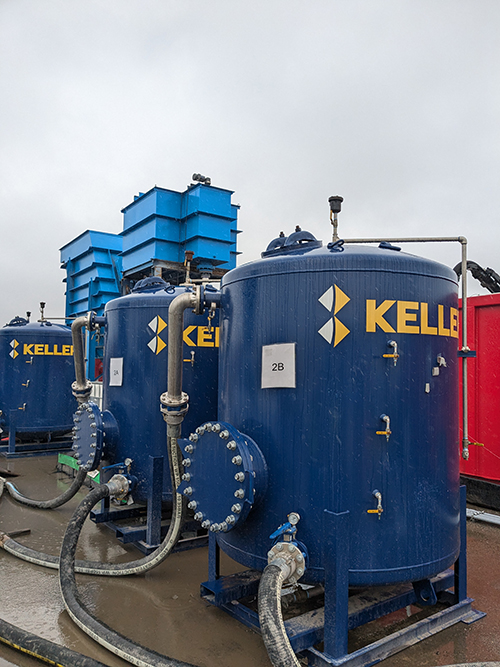
Its media are also designed for flexibility in deployment, ensuring they can be easily integrated into existing treatment systems. This capability is especially valuable for industries with legacy systems or for municipal clients looking to upgrade or expand their wastewater treatment capabilities without overhauling their entire infrastructure. Sorbster’s media can be deployed in standard vessels or non-standard setups, such as frac tanks or older metal plating tanks, making them highly adaptable to a range of treatment environments.
Data-Driven Success and Long-Term Collaboration
 This versatility stems from Sorbster’s data-driven approach to wastewater treatment. Their proprietary ion-removal model ensures that every system the company deploys is grounded in rigorous testing and scientific analysis. From initial water testing to pilot-scale trials, Sorbster’s technical team collects extensive data to refine its models and ensure that each solution meets or exceeds performance expectations.
Its commitment to continuous improvement is reflected in the accuracy of its predictions. Clients can be confident that Sorbster’s solutions will deliver results, not only in terms of meeting discharge limits but also in optimizing operational efficiency and reducing long-term costs.
Sorbster’s strong client relationships complement this focus on data and performance. Clients appreciate the company’s transparency, particularly when it comes to setting realistic expectations.
“Being accurate when the treatment will work and honest when it won’t, is key to happy customers,” Frazer explains.
Sorbster’s open communication and commitment to providing effective, customized solutions have fostered long-term relationships with clients across various sectors. As discharge limits continue to tighten globally, particularly in Latin America, demand for Sorbster’s solutions has surged, with companies seeking reliable and effective methods for removing heavy metals from wastewater at parts-per-trillion concentrations.
Impact across Latin America
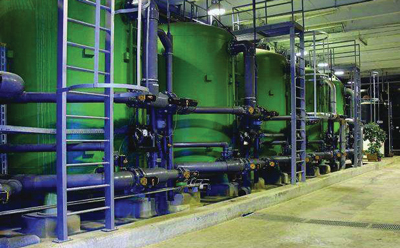
As Sorbster targets industries and municipalities across Latin America, it faces unique challenges that require tailored solutions. Many Latin American countries have stringent environmental regulations that require businesses to remove heavy metals from wastewater, particularly from industrial sites. In contrast, smaller municipalities often struggle with aging infrastructure and limited resources. Sorbster’s ability to deploy its filtration media in various configurations, combined with the low operator activity required, makes its solutions ideal for both large industrial sites and smaller, remote communities.
 For example, lead contamination in drinking water is a significant concern in many parts of Latin America, and Sorbster’s media are well-suited to address this issue. The company’s promoted media line can readily remove lead at parts per billion, offering an affordable and effective solution for smaller communities. Its solutions have also proven valuable in more remote regions, where the ability to deploy filtration systems with minimal operator involvement is crucial. In these cases, the simplicity of the technology, combined with the non-hazardous disposal of spent media, ensures that even the most underserved communities can benefit from effective wastewater treatment.
Sorbster’s ability to scale its solutions and adapt to diverse needs has contributed to the company’s growing success in Latin America. The company’s technologies have been successfully implemented in various industries, ranging from mining to municipal water treatment, resulting in measurable improvements in water quality, cost-effectiveness, and compliance. Clients have reported immediate improvements in the clarity and quality of their treated water, while operational reliability has also been enhanced through the use of Sorbster’s filtration systems.
As global environmental regulations continue to tighten and the demand for sustainable wastewater treatment solutions grows, Sorbster is poised to play an even more prominent role in shaping the future of the industry. The company’s commitment to innovation, data-driven decision-making and environmental responsibility ensures that it will remain at the forefront of the wastewater treatment space. Whether addressing complex contamination issues in industrial sites or providing affordable solutions for small communities, Sorbster’s cutting-edge technology offers a scalable, effective way to meet the world’s most pressing water treatment challenges.
With a growing presence in Latin America and beyond, Sorbster is helping businesses and municipalities not only meet regulatory standards but also contribute to the broader goal of environmental sustainability. Through its continued focus on research, development, and customer-centric service, Sorbster is not just solving wastewater challenges— it is shaping a cleaner, more sustainable future for the industries and communities it serves.
